Archive & Document Preservation Humidification Solutions
Archives and preservation environments protect materials that carry historical, legal, and cultural value. Museums, libraries, government records facilities, universities, and corporate archives all rely on controlled storage conditions to maintain document integrity over time.
Humidity plays a defining role in preservation. Fluctuations can lead to paper degradation, warping, mold growth, and long-term deterioration of sensitive materials. Lincoln Associates provides precision solutions that integrate with industrial/commercial humidification systems to support stable, controlled environments for long-term preservation.
Why Humidity Control Is Critical for Archives
Archival environments are designed to preserve materials for decades or centuries, which places strict demands on environmental stability. Humidity influences how materials age, respond to storage conditions, and resist biological threats. Even small fluctuations can create cumulative damage over time.
Several preservation risks are tied directly to humidity levels, especially in archives that store paper, photographs, film, textiles, and other organic materials.
- Preservation of Paper and Organic Materials: Paper, parchment, photographs, and textiles respond quickly to environmental changes. Low humidity can cause brittleness and cracking, while elevated moisture levels accelerate chemical breakdown and decay.
- Prevention of Mold and Biological Growth: Excess humidity creates conditions that support mold, mildew, and microbial activity. Controlled environments reduce the risk of biological damage to irreplaceable materials.
- Dimensional Stability: Humidity fluctuations cause expansion and contraction in organic materials. This movement leads to curling, warping, and structural damage that cannot be reversed.
- Preservation Standards and Best Practices: Archival institutions follow strict environmental guidelines to protect collections. Maintaining relative humidity between 40 and 55 percent supports conservation goals and reduces long-term risk.
Archival Environments That Depend on Humidity Control
Archives are not limited to one type of facility. Any environment responsible for preserving sensitive physical materials needs stable humidity control to reduce deterioration, protect collection value, and support long-term access.
Museums and Cultural Institutions
Artifacts, manuscripts, and historical documents require stable humidity to prevent deterioration. Controlled environments protect materials that cannot be replaced.
Libraries and Special Collections
Rare books and archival collections depend on stable storage conditions to protect bindings, paper fibers, and inks from degradation.
Government and Institutional Records Storage
Large volumes of records must remain intact for legal and administrative use. Environmental consistency supports long-term accessibility.
Film, Photography, and Media Archives
Film negatives, prints, and magnetic media are highly sensitive to moisture. Stable humidity extends usable lifespan and preserves image quality.
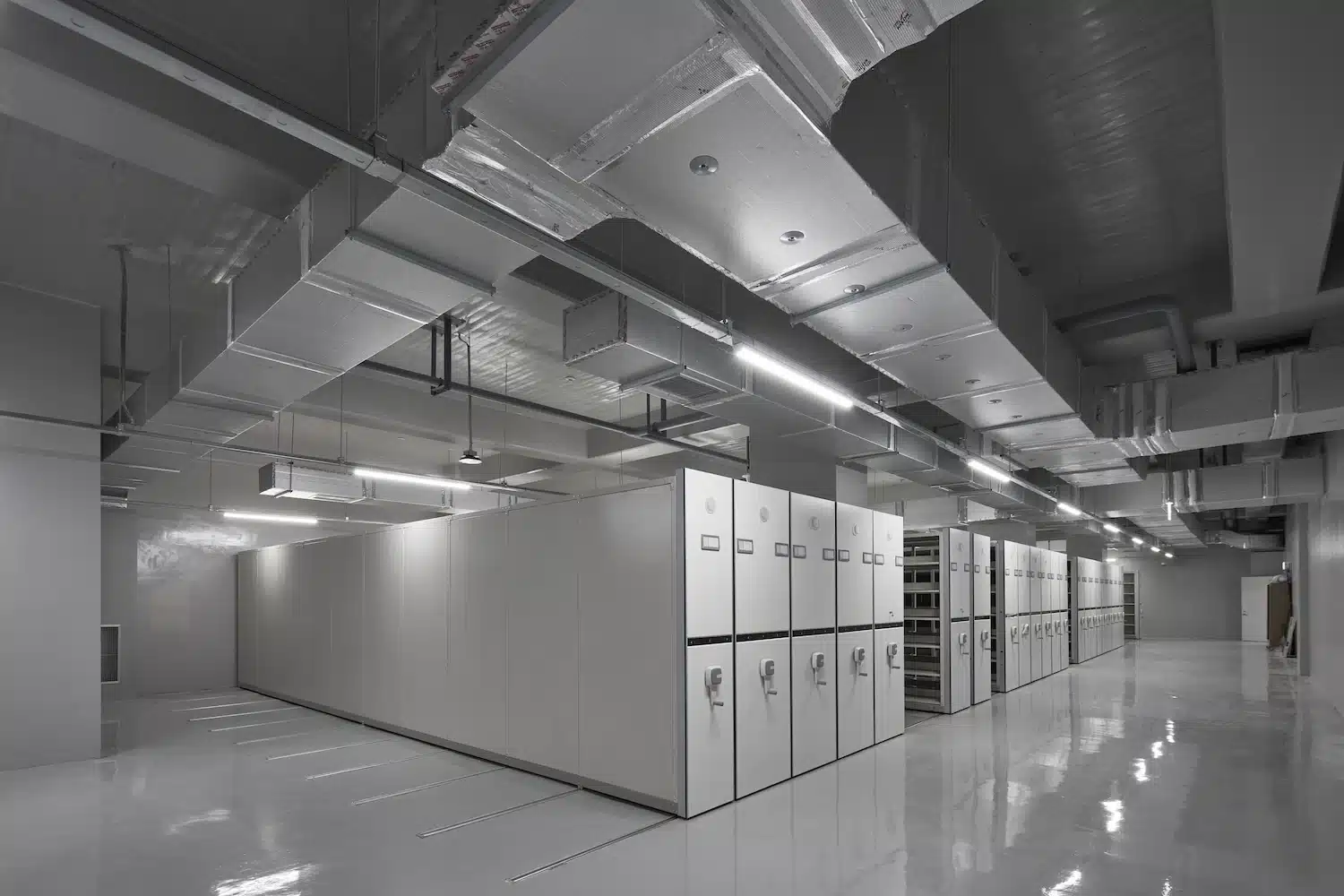
Benefits of Proper Archive Humidification
- Protection of historical documents and artifacts
- Reduced risk of mold and biological contamination
- Prevention of warping, cracking, and material degradation
- Stable conditions for long-term preservation
- Consistent environmental performance across storage areas
- Support for professional conservation standards
Humidification Solutions for Archive Facilities
Lincoln Associates provides systems designed for precision and long-term reliability in preservation environments.
Solutions integrate with air handling equipment and environmental monitoring platforms to maintain consistent conditions. Custom configurations support archive vaults, storage rooms, and specialized preservation spaces.
Equipment from partners such as Munters delivers controlled humidity performance in sensitive environments. Energy-efficient operation supports continuous use while minimizing operating costs. Lincoln provides support from system design through installation and ongoing service.
Protect Collections for the Long Term
Preservation depends on environmental stability. Humidity control plays a central role in protecting materials that hold long-term value. Lincoln Associates delivers the expertise and systems required to maintain consistent conditions across archive facilities.