
Industrial HVAC Air Curtains
Industrial and commercial facilities throughout the Southeast face persistent infiltration challenges due to frequent door cycles, forklift traffic, and exposure to hot, humid outdoor air. Each time a door opens, conditioned air escapes and unfiltered air enters—forcing HVAC systems to compensate with additional runtime and energy use. A properly engineered air curtain provides a non-obstructive air barrier that minimizes these losses and stabilizes interior conditions.
Industrial HVAC Air Curtains
Air curtains are essential components in industrial HVAC systems, designed to create a barrier of air that separates different environments while allowing unobstructed access. They are typically installed over doorways and entrances, where they help to maintain temperature control, reduce energy costs, and prevent the entry of contaminants, such as dust, insects, and pollutants. In industrial settings, maintaining a stable environment is ideal, and air curtains play a significant role in ensuring that heating and cooling systems operate efficiently. Lincoln Associates offers a selection of top-tier brands, including Mars Air Systems, a leader in the industry known for its reliable and efficient industrial HVAC air curtains solutions. Mars air curtains are engineered to meet the demanding needs of industrial environments, providing robust performance that enhances energy efficiency and environmental control. Whether you are looking to protect your workspace from outdoor elements or improve the energy efficiency of your facility, Lincoln Associates has the expertise and products to meet your industrial HVAC needs.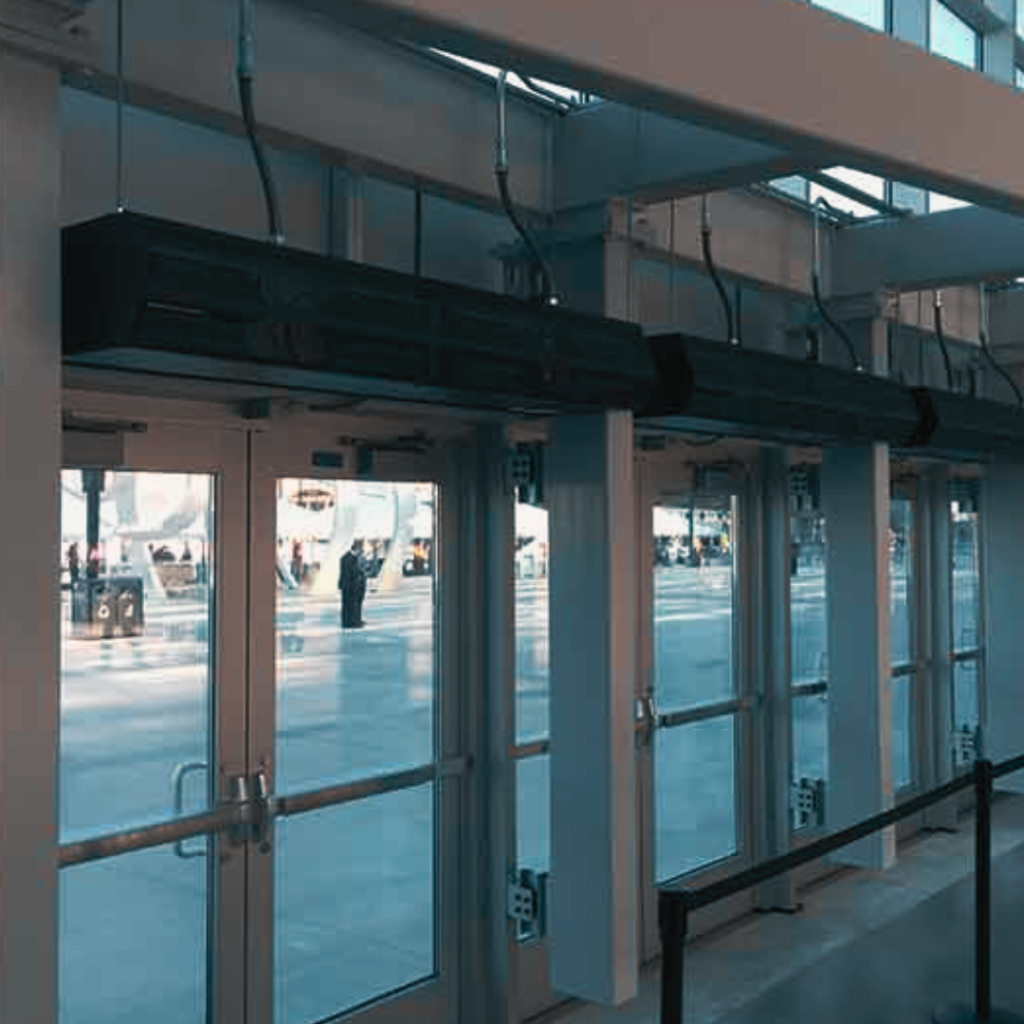
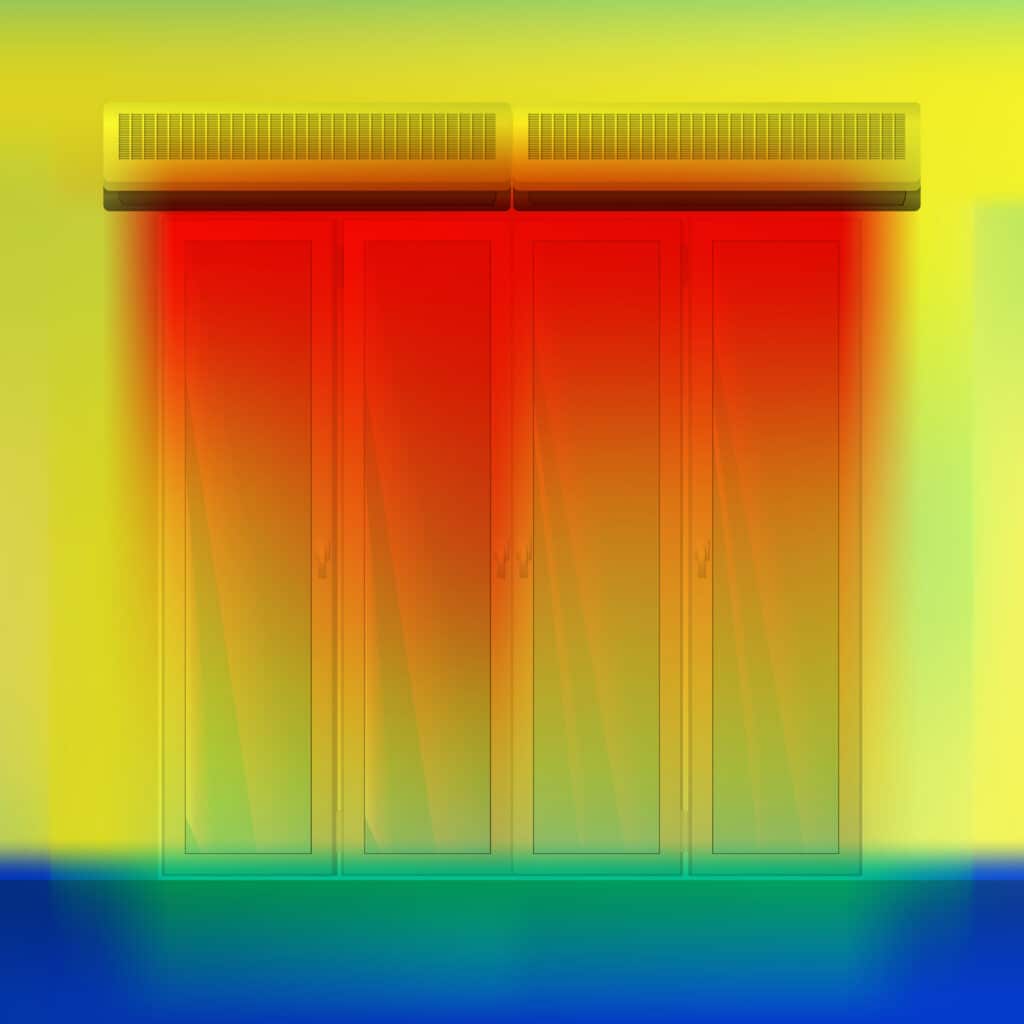
How Industrial Air Curtains Support Facility Performance
Well-designed air curtains can reduce infiltration by as much as 80%, making them one of the most impactful additions to an industrial HVAC strategy. This improved control supports larger system reliability, including heating, cooling, and even specialty systems such as mission critical HVAC systems that depend on predictable indoor environments.
Common applications include:
- Warehouses and distribution hubs
- Cold storage and freezer facilities
- Food processing and packaging environments
- Production floors and industrial manufacturing
- Retail back-of-house areas and commercial entrances
Each application benefits from reduced infiltration, better temperature stability, and consistent airflow around critical access points.
Southeast United States Industrial HVAC & Refrigeration Services
Consulting
Design
Integration
Benefits of Industrial HVAC Air Curtains
Energy Efficiency
Air curtains help reduce the workload on heating and cooling systems by minimizing the loss of conditioned air. This leads to lower energy consumption and significant cost savings over time.
Temperature Control
By maintaining a consistent temperature barrier, air curtains prevent drafts and hot or cold spots within your facility. This ensures a stable and comfortable environment for both workers and equipment.
Contaminant Prevention
Air curtains act as a protective shield against dust, insects, and other airborne pollutants, keeping your indoor environment clean. This is especially important in industries where hygiene and cleanliness are critical.
Improved Air Quality
With air curtains in place, the influx of outdoor pollutants is significantly reduced, leading to better indoor air quality. This creates a healthier work environment and can contribute to increased productivity.
Cost Savings
By reducing energy waste and preventing the need for frequent maintenance due to contaminants, air curtains offer long-term cost savings. These savings make air curtains a smart investment for any industrial facility.
Enhanced Comfort
Air curtains create a more comfortable environment by eliminating drafts and maintaining a consistent temperature throughout the workspace. This improves the overall well-being and satisfaction of employees and visitors.
Applications Across Industrial & Commercial Facilities
Air curtains are not interchangeable. They must be engineered for the facility type, doorway dimensions, air velocity requirements, and environmental conditions. At Lincoln Associates, application-driven design ensures each solution integrates smoothly into the broader industrial HVAC services framework.
Warehouses & Loading Bays
Large, frequently cycled doors allow significant infiltration. Air curtains help maintain indoor temperatures without hindering forklift or foot traffic.
Cold Storage & Food Facilities
Warm, humid air infiltration leads to frost, moisture imbalance, and increased refrigeration load. Air curtains support thermal separation and cold chain compliance while reducing defrost cycles.
Distribution Centers & Retail Operations
Air curtains stabilize entrance zones, reducing drafts and improving comfort for employees stationed near busy doorways.
Manufacturing & Industrial Production Areas
Production lines and sensitive processes depend on stable temperatures and airflow. Air curtains reduce disruption while improving the reliability of upstream HVAC systems.
To enhance environmental stability even further, air curtains are often paired with solutions like industrial HVAC air turnover units and infrared heating systems, both of which support large-space conditioning and efficient heat distribution.
System Design Considerations for Industrial Air Curtains
Selecting the right industrial air curtain involves more than matching a unit to a doorway. Performance depends on proper engineering, airflow modeling, and an understanding of how the curtain interacts with the building’s HVAC/R systems. At Lincoln Associates, we evaluate multiple factors during the design process to ensure equipment performs reliably and supports long-term facility efficiency.
Door Height and Exposure
Door height and width are foundational variables, but air volume, discharge velocity, and temperature differential between indoor and outdoor environments are equally important. Industrial doors exposed to hot, humid Southeastern climates often require higher discharge velocities and carefully calibrated airflow direction to ensure a continuous, effective barrier. Conditions such as negative pressure zones, mechanical ventilation systems, or adjacent process areas can influence performance as well, which is why a facility-wide perspective is essential.
Specialized Environments
For facilities operating within specialized environments, such as cold storage, pharmaceutical production, or clean packaging, air curtains may be combined with complementary systems like mission-critical HVAC systems to enhance environmental separation. In high-bay industrial buildings, pairing air curtains with broader circulation strategies, including air turnover units, helps maintain uniform temperatures throughout the space.
Whether you’re installing a single unit or upgrading multiple dock positions, the goal is the same: an engineered solution that supports building performance, reduces HVAC load, and contributes to long-term operational stability.
Controls, Automation & Integration Into Facility Operations
Modern industrial air curtains do more than deliver airflow; they function as integrated components within a facility’s mechanical and controls ecosystem. At Lincoln Associates, we help facilities streamline these systems with sensor-based activation, building automation connectivity, and advanced control options that enhance both performance and energy efficiency.
Sensors
Door-mounted magnetic switches, pressure sensors, and occupancy sensors can automatically activate air curtains only when needed, reducing energy consumption during low-traffic periods.
In environments where thermal loss is most severe, such as cold storage loading zones, automation ensures the air curtain engages instantly to minimize infiltration and maintain system balance. Tying these controls into a building automation system (BAS) provides operators with real-time visibility and consistent sequencing across ventilation, heating, and cooling systems.
Integrations
For facilities investing in broader HVAC/R modernization, air curtains can be incorporated into automated workflows that align with industrial heating solutions such as infrared heating systems or integrated air management strategies. This ensures equipment operates as part of a coordinated system rather than an isolated component.
The result is a solution that improves reliability, reduces human oversight, and supports energy-efficient operation, critical advantages for facilities operating multiple shifts or maintaining continuous production cycles.
How Air Curtains Integrate With Larger HVAC Strategies
Air curtains perform best when they are thoughtfully paired with the rest of a facility’s HVAC/R infrastructure. By reducing infiltration at exterior openings, they directly support system categories such as:
- Space heating
- Humidity and moisture control
- Ventilation strategies
- Refrigeration efficiency
- Air movement and circulation
This makes air curtains a natural complement to technologies like air turnover units, make-up air systems, and infrared heating, each of which contributes to maintaining large, open industrial spaces.
For customers working with multi-system configurations, Lincoln Associates provides integrated design guidance through our full services overview.
About Lincoln Associates
Founded in 1972, Lincoln Associates has been a trusted name in the industrial HVAC and refrigeration industry for over five decades. Our mission is to provide innovative, reliable, and energy-efficient solutions that meet the evolving needs of our clients in the industrial and commercial sectors. With a deep expertise in HVAC and refrigeration equipment, we specialize in custom system integration tailored to the specific demands of each project, ensuring optimal performance and sustainability. The industrial and commercial landscape of the Southeast United States presents unique challenges, from fluctuating temperatures to high humidity levels. In this environment, efficient Heating, Ventilation, Air Conditioning, and Refrigeration (HVAC/R) systems are not just a luxury but a necessity. These systems play a critical role in maintaining operational efficiency, reducing energy costs, and ensuring the comfort and safety of employees and customers. Our commitment to excellence and innovation has made us a leading provider of HVAC and refrigeration solutions throughout the region, helping businesses thrive in a competitive and demanding market.

Trusted Manufacturer Partnerships
Lincoln Associates offers a selection of top-tier brands, including Mars Air Systems, a leader in the industry known for its reliable and efficient industrial HVAC air curtains solutions.
Mars air curtains are engineered to meet the demanding needs of industrial environments, providing robust performance that enhances energy efficiency and environmental control.
Whether you are looking to protect your workspace from outdoor elements or improve the energy efficiency of your facility, Lincoln Associates has the expertise and products to meet your industrial HVAC needs.

Why Choose Lincoln Associates
At Lincoln Associates, engineering excellence is at the core of everything we do. Our team of skilled engineers is dedicated to designing and delivering HVAC and refrigeration systems that meet the highest standards of quality and performance. We believe that exceptional customer service is just as important as technical expertise, which is why we prioritize clear communication, responsiveness, and a customer-first approach in every project. Our goal is not just to complete a job, but to build long-term partnerships with our clients, ensuring that they receive ongoing support and value from our solutions for years to come. By combining engineering excellence with outstanding customer service, we have earned the trust and loyalty of businesses across the Southeast United States.
Educational Resources
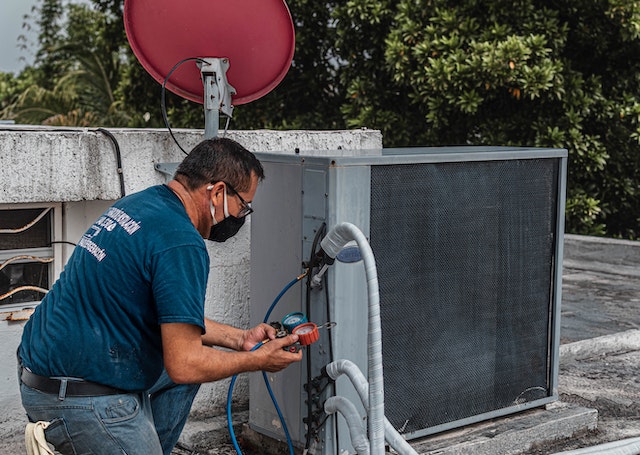
At Lincoln Associates, we are committed to empowering our clients and industry professionals through continuous learning and development. In partnership with Lincoln University, we offer a range of training and educational programs designed to enhance knowledge and skills in the industrial HVAC air curtains and refrigeration fields. These programs are tailored to meet the needs of both seasoned professionals and newcomers, providing them with the latest industry insights, technical training, and hands-on experience. By investing in education, we help ensure that our clients and partners stay ahead in a rapidly evolving industry, equipped with the knowledge and expertise needed to succeed.
Frequently Asked Questions
Air curtain sizing depends on door height, width, mounting constraints, and the required discharge velocity to create a continuous air barrier. Industrial doorways often require higher-velocity units to overcome outdoor conditions and maintain proper separation. At Lincoln Associates, we evaluate each opening to ensure the selected model delivers full coverage and reliable performance.
Yes. Most industrial air curtains can be added to existing HVAC/R systems with minimal disruption. They can operate independently or integrate with controls and automation platforms already in place.
Absolutely. Air curtains are widely used in cold rooms and freezer applications to limit warm, humid air infiltration, reduce frost buildup, and support stable refrigeration loads.
Routine inspection is recommended. Typical tasks include cleaning the intake, checking fan performance, and ensuring sensors and controls operate correctly.
Heated units warm the discharge air for added comfort in cold climates, while unheated models focus solely on environmental separation and energy savings.
Lincoln Associates offers a comprehensive range of services, including consulting, design, and custom system integration for industrial and commercial HVAC and refrigeration systems. Their team of experts works closely with clients to develop tailored solutions that meet specific operational needs, ensuring optimal performance and energy efficiency. From initial concept to final installation, Lincoln Associates is committed to delivering top-quality service and support.
Lincoln Associates was established in 1972 with a mission to provide innovative HVAC and refrigeration solutions to the industrial and commercial sectors. Over the past five decades, the company has built a reputation for engineering excellence and customer service, becoming a trusted partner for businesses throughout the Southeast United States. Their long-standing commitment to quality and client satisfaction has driven their growth and success in the industry.
Lincoln Associates specializes in the design, integration, and installation of industrial HVAC air curtains, focusing on energy efficiency, temperature control, and contaminant prevention. Their expertise includes creating custom solutions that enhance the performance of HVAC systems in industrial environments, ensuring stable and comfortable conditions. With decades of experience, they understand the critical role air curtains play in maintaining operational efficiency and reducing costs.
Lincoln Associates proudly represents Mars, a leading manufacturer of industrial HVAC air curtains. Mars is known for its high-quality, reliable products that provide robust performance in demanding industrial environments. By partnering with Mars, Lincoln Associates offers their clients access to some of the best industrial HVAC air curtains solutions available, ensuring that their HVAC systems are both efficient and effective.
To request a consultation with Lincoln Associates, you can visit our website at lincolnassoc.com and fill out the contact form, or reach out directly via phone or email. Our team is ready to assist you with your industrial HVAC air curtains and refrigeration needs, offering expert advice and tailored solutions. Whether you’re starting a new project or looking to upgrade an existing system, Lincoln Associates is here to help.
Lincoln Associates offers a variety of educational resources, including training and development programs in collaboration with Lincoln University. These programs are designed to enhance knowledge and skills in the HVAC and refrigeration fields, providing industry professionals with the latest technical training and industry insights. By participating in these programs, clients and partners can stay up-to-date with the latest advancements and best practices in the industry.


