
Industrial Dehumidification Solutions
Custom Humidity Control Systems for Commercial & Industrial Facilities
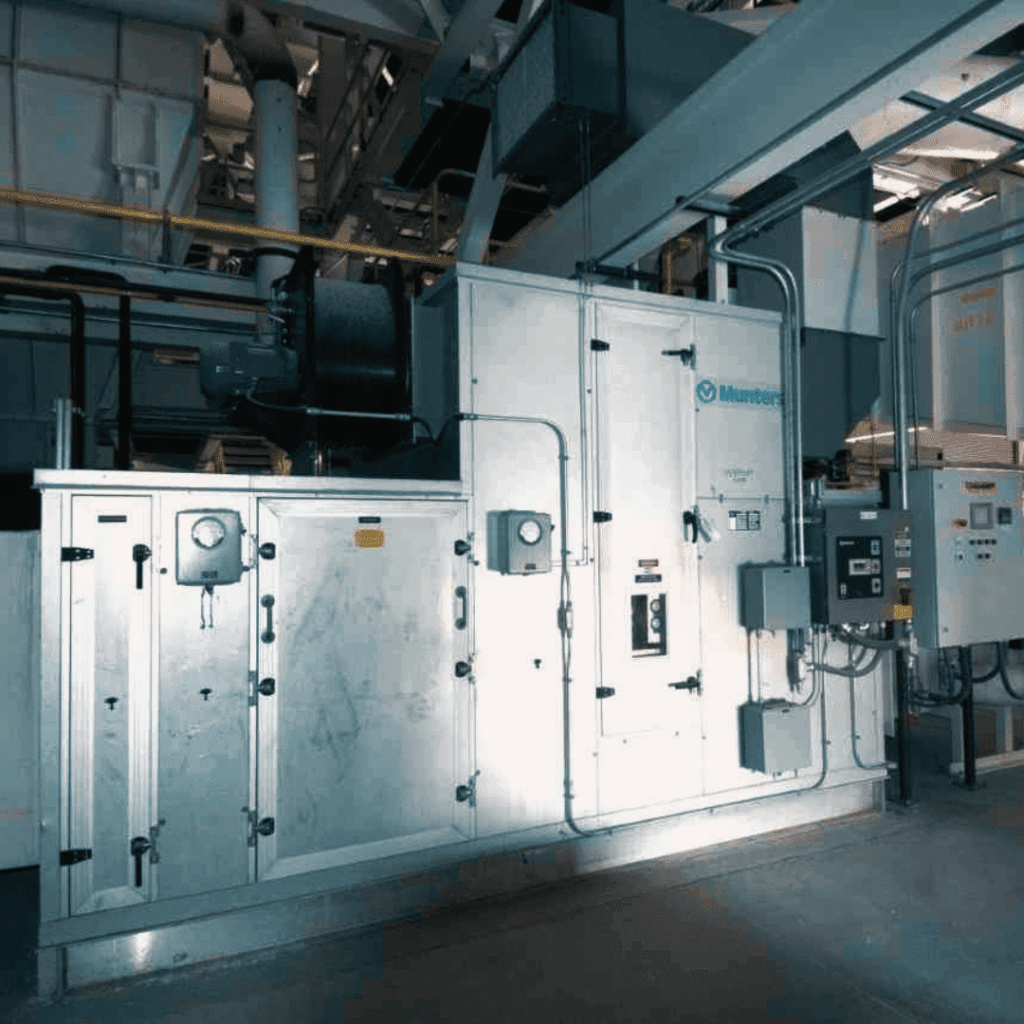
Humidity doesn’t just make a space uncomfortable—it can put your entire operation at risk. Lincoln Associates designs and installs engineered dehumidification systems using Munters equipment, helping commercial and industrial facilities stay dry, safe, and efficient, regardless of the challenging climate. From warehouses and distribution centers to food processing plants and high-tech manufacturing floors, our high-capacity systems stabilize moisture levels, protect your equipment, and ensure consistent indoor conditions.
Why Humidity Control Matters
Excess moisture can damage materials, corrode machinery, and promote mold growth. Inadequate humidity control can lead to slip hazards on production floors, product spoilage, and even compliance issues. With the Southeast’s climate—characterized by seasonal humidity spikes and year-round moisture—it’s crucial to maintain optimal humidity levels to safeguard your operations, inventory, and equipment.
A well-planned dehumidification system keeps moisture in check, ensuring that your equipment, materials, and people stay protected.
How Industrial Dehumidification Works
Dehumidification systems for commercial and industrial applications typically work using two primary methods: cooling and desiccant drying.
- Cooling Dehumidifiers: These systems draw humid air over cooling coils. As warm air passes over the cold surface, moisture condenses and drains away.
- Desiccant Dehumidifiers: For low temperatures or extremely low humidity requirements, desiccant wheels absorb water vapor that cooling coils cannot catch.
Key components of dehumidification systems include:
- Evaporator Coil: Drops air temperature to pull moisture out of the air
- Refrigerant Compressor: Powers the cooling cycle
- Desiccant Wheel: Provides extra drying power when needed (used in systems provided by Munters)
- Fans & Blowers: Circulate air through the system
- Drain Pump: Clears collected water
- Smart Controls: Allow you to set and monitor humidity levels for improved performance
Modern dehumidification units often integrate with Building Management Systems (BMS) for easier monitoring and control.
Types of Industrial Dehumidifiers
The right system depends on the specific needs of your space, process, and moisture load. Lincoln Associates offers a range of dehumidification products tailored for different applications:
- Refrigerant Dehumidifiers: Ideal for moderate to high humidity levels in warm conditions, featuring Munters technology.
- Desiccant Dehumidifiers: Effective in low temperatures or when very low relative humidity is required, such as in pharmaceutical production.
- Portable Commercial Units: Flexible, mobile dehumidifiers for temporary drying needs, seasonal fluctuations, or facility expansions.
- Integrated Dehumidification Systems: Built directly into HVAC air handlers for continuous humidity control alongside heating and cooling.
Applications Across Industries
Industrial dehumidification systems are essential in environments where product integrity, equipment lifespan, and indoor air quality must be protected. Common applications include:
- Warehouses & Storage: Prevent mold, mildew, and product spoilage.
- Food & Beverage Processing: Maintain required moisture levels to meet food safety standards.
- Pharmaceutical & Medical: Control humidity for compliance, raw material storage, and lab conditions.
- Plastics & Rubber Manufacturing: Support consistent extrusion processes and prevent defects caused by moisture.
- Data Centers: Protect sensitive electronics from moisture-related failures.
- Basements & Subgrade Facilities: Control persistent dampness in below-grade storage or mechanical rooms.
In industries like food processing, uncontrolled humidity can lead to spoilage or mold growth, while data centers may experience static discharge or downtime from moisture-related damage. Proactive dehumidification systems preserve uptime, protect valuable assets, and ensure compliance.
Choosing the Right System
Selecting the right dehumidification solution for your facility depends on several factors. Lincoln Associates works closely with you to assess your needs and provide a tailored solution:
- Moisture Load: How much moisture needs to be removed from the air?
- Energy Use: Balancing drying power with efficiency to reduce operating costs.
- Drainage: Ensuring that water removal works effectively around the clock.
- Controls: Automating setpoints and alarms for easy monitoring.
- Integration: Connecting the dehumidification system with your existing HVAC and airflow.
When to Upgrade or Retrofit
If your facility is experiencing constant condensation, mold growth, or relies on portable dehumidifiers that can’t keep up, it may be time to consider a permanent, integrated dehumidification solution. An upgraded system not only reduces energy waste but also ensures a stable, consistent environment for your operations.
Maintenance & Support Services
Even the best systems need routine care to continue performing optimally. Lincoln Associates offers lifecycle support for dehumidification systems, including:
- Scheduled Inspections: Performance checks to ensure the system is operating as designed.
- Routine Maintenance: Filter changes, coil cleaning, and drainage checks.
- Controls Testing: Sensor calibration and system updates for accurate performance.
- Fast Parts Access: Quick access to replacement parts and system upgrades when needed.
Why Choose Lincoln Associates
Businesses across the Southeast trust Lincoln Associates because we bring decades of experience designing and supporting engineered moisture control systems. Our team works alongside facility managers, contractors, and industrial engineers to provide solutions that:
- Address tough moisture challenges unique to the Southeast’s climate
- Use proven, energy-efficient equipment
- Fit within your budget, footprint, and operational goals
- Provide local support for planning, installation, and lifecycle service
We work closely with top-tier manufacturing partners to deliver durable, high-performance equipment that stands up to demanding industrial applications.
Start Your Dehumidification Project
If you need to solve moisture problems for good, Lincoln Associates is ready to help. We’ll assess your facility, run the numbers, and design a dehumidification system that fits your needs and budget.


