
Air Handling Equipment Solutions
Custom Air Handling Systems for Commercial & Industrial Facilities
Your HVAC system is only as strong as its air handler. Air handling units (AHUs) are crucial for keeping air moving, clean, and comfortable—ensuring your heating and cooling investment actually delivers. Lincoln Associates helps commercial and industrial facilities across the Southeast design and integrate air handling systems that perform reliably day after day. We work with trusted partners like Flex Air, Magic Aire, and ThermoTek to deliver customized solutions for every application.
From modular units for tight retrofit spaces to large central AHUs for busy campuses, our systems are built to match your air quality goals, energy targets, and space requirements.
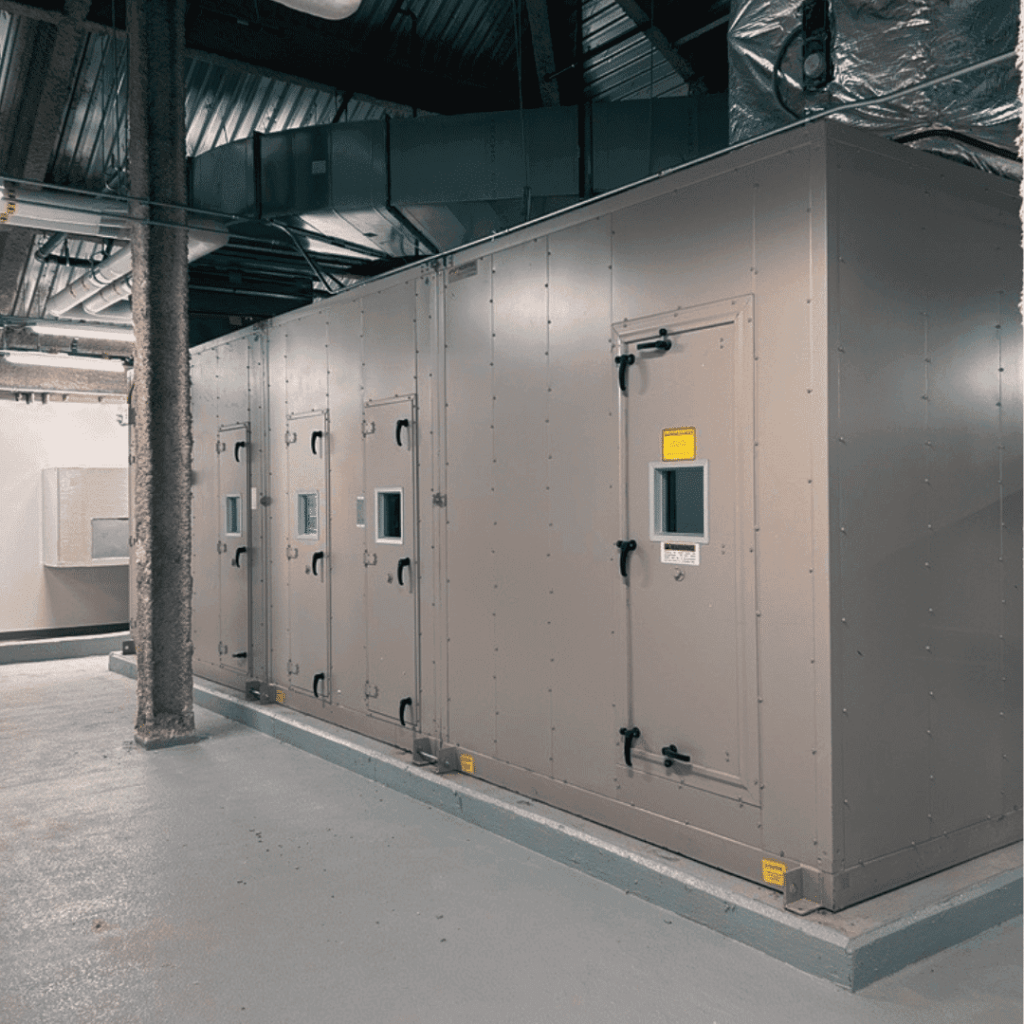
Why Proper Air Handling Matters
A well-designed air handler does more than circulate air—it balances temperature, humidity, and filtration to create a healthy, productive indoor environment. Poorly configured or outdated AHUs can lead to uneven temperatures, drafts, stale air, and wasted energy. With modern air handling systems, building owners gain:
- Steady, balanced airflow
- Better control over temperature and humidity
- Cleaner indoor air through advanced filtration
- Energy savings with variable speed fans and smart controls
How Air Handlers Work
Air handlers regulate and move air through a building by pulling it in, conditioning it to the desired temperature and humidity, filtering it, and then distributing it through ductwork.
Key components include:
- Blower/Fan: Circulates air at the required volume and pressure.
- Heating & Cooling Coils: Use chilled or hot water, refrigerant, or electric heat to adjust temperature.
- Filters: Remove dust, pollen, and airborne particles for better indoor air quality.
- Dampers: Control airflow direction and balance intake and exhaust.
- Sound Attenuators: Reduce noise levels for quiet operation.
- Control Panel: Automates fan speeds, temperature setpoints, and monitors system status.
Modern AHUs often integrate with Building Management Systems (BMS) for real-time monitoring, energy tracking, and performance optimization.
Types of Air Handler Units
Lincoln Associates supports a full range of air handlers to match your building’s size and function. We offer systems from Flex Air, Magic Aire, and ThermoTek for a variety of applications:
- Central Air Handlers: Serve large areas or entire buildings from one location, often installed in mechanical rooms or rooftops.
- Packaged Units: All-in-one solutions that simplify installation and save space.
- Modular AHUs: Built in sections for easier shipping and assembly in tight spaces or renovations.
- Terminal Units: Smaller AHUs that handle individual rooms or zones for precise control.
Design Considerations and Best Practices
Every building has unique needs. Lincoln Associates helps you pick the right air handler, size it correctly, and plan the installation so your building gets steady airflow and dependable comfort.
This means:
- Sizing for proper airflow and static pressure
- Choosing the right coils for your heating and cooling needs
- Picking filters that match indoor air quality goals
- Laying out ductwork to limit energy loss
- Planning clear access for service and filter changes
Applications Across Industries
Reliable air handling equipment is central to many commercial and industrial environments. Lincoln Associates works with Flex Air, Magic Aire, and ThermoTek to provide solutions for diverse industries:
- Commercial Buildings: Offices, retail centers, and schools rely on consistent air circulation for occupant comfort.
- Healthcare & Labs: Hospitals and cleanrooms require advanced filtration, pressurization, and precise air quality control.
- Industrial Facilities: Manufacturing plants and warehouses need robust air handlers to maintain clean air and proper ventilation for workers and equipment.
- Specialty Applications: Data centers, tech hubs, and high-humidity environments benefit from custom-engineered AHUs that meet unique demands.
Benefits of Upgrading Your AHU
Upgrading or replacing aging air handling equipment can bring measurable returns, including:
- Lower Energy Costs: Variable frequency drives and modern motors improve energy efficiency.
- Better Indoor Air Quality: Enhanced filtration and air exchange remove pollutants and allergens.
- Improved Comfort: Advanced controls allow for precise zoning and temperature balancing.
- Easier Maintenance: Modular designs and accessible components simplify servicing.
- Compliance & Codes: New AHUs help meet updated energy standards and indoor air quality guidelines.
When to Upgrade or Retrofit
If your building has hot and cold spots, poor airflow, or rising energy costs, your AHU could be the issue. Old units cost more to run, break down more often, and can harm indoor air quality. Upgrading or retrofitting your air handler can lower operating costs and extend the life of your HVAC system.
Maintenance and Support
A good air handler needs regular attention. Lincoln Associates helps you protect your system investment with:
- Scheduled inspections and filter swaps
- Coil cleaning and fan checks
- Controls testing and recalibration
- Quick access to parts for fast repairs
Why Choose Lincoln Associates
When you work with Lincoln Associates, you get more than just equipment—you get expert guidance from a team that understands real buildings, real code requirements, and how to fit the right air handler to your space. We partner with top manufacturers like Flex Air, Magic Aire, and ThermoTek to deliver reliable, high-performance systems. We’re committed to being by your side, providing support from design through installation and beyond.
Start Your Air Handling Project
Not sure where to start? Our team will help you evaluate your current air handling setup, recommend the right approach, and guide you through every step.


