
Replacement Evaporator Coils for HVAC Systems
Evaporator coils are essential for any HVAC system tasked with delivering consistent cooling performance. As the component responsible for absorbing heat from indoor air, evaporator coils directly impact system efficiency, meaning coil degradation demands prompt attention.
Lincoln Associates supports engineering teams, contractors, and facility managers with fast, reliable replacement coil solutions tailored for commercial and industrial HVAC systems.
HVAC replacement coils are a critical part of system uptime. We’re here to make the replacement process seamless.
What are Evaporator Coils and Why Do They Matter?
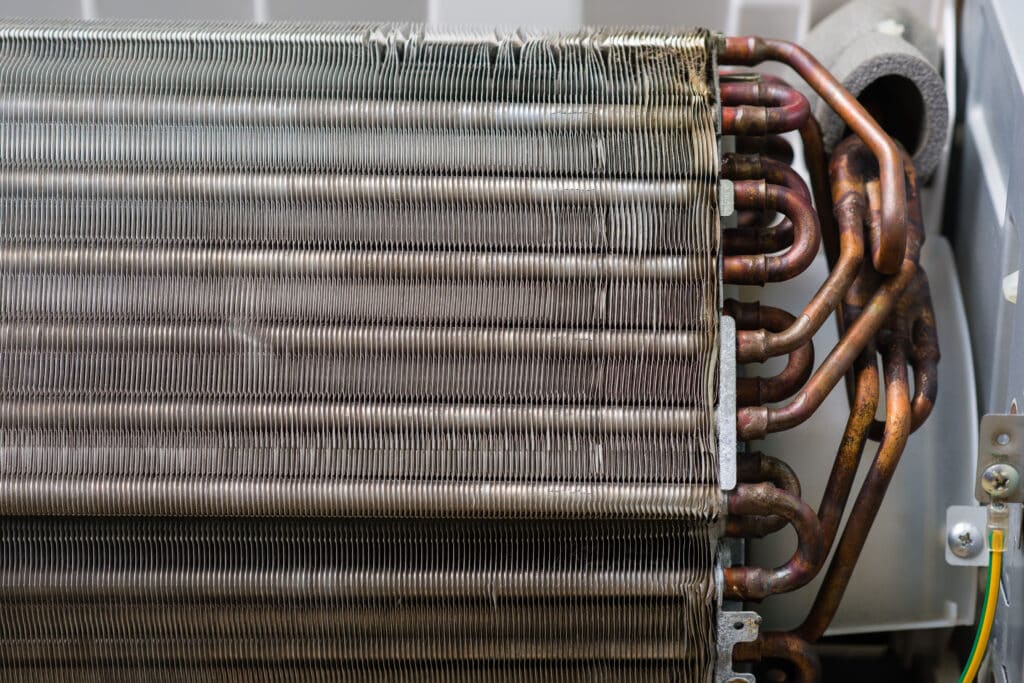
Evaporator coils contain refrigerant that absorbs heat from incoming air. As warm air passes over the coil’s surface, the refrigerant inside evaporates, removing heat and enabling effective temperature control.
Over time, coil performance degrades due to internal fouling, corrosion, or material fatigue. This results in poor cooling, higher energy bills, and unnecessary strain on the system. Replacing faulty coils restores design performance and prevents more costly downstream issues.
Applications of Evaporator Coils
Evaporator coils are used in a wide range of environments:
- Commercial rooftop units and split systems
- Industrial air handlers and process cooling setups
- Institutional systems requiring precise climate control
Their design varies to suit specific system configurations, but the demand for high-performance, corrosion-resistant construction is universal. Our replacement solutions are compatible with most major HVAC systems and can be customized for unique geometries.

Features and Benefits
Lincoln Associates provides evaporator coils built for:
- Energy efficiency through optimized surface area, fluid flow, and thermal exchange characteristics
- Durability with corrosion-resistant coatings, heavy-duty construction, and materials rated for harsh operating environments
- Easy integration into existing HVAC assemblies, with custom or OEM-compatible dimensions
- Long-term savings via reduced downtime, improved system performance, and minimized energy waste
All coils meet or exceed OEM specifications and are performance-tested for leak integrity, thermal capacity, and field reliability, ensuring dependable operation from day one.
Manufacturers and Brands We Distribute
We offer evaporator coil replacements through a wide network of trusted coil fabricators. As an experienced HVAC parts distributor, we ensure fast sourcing and authentic product availability.




Why Choose Us for Your Evaporator Coil Needs?
With decades of HVAC experience and engineering support, Lincoln Associates delivers replacement evaporator coils with confidence, accuracy, and speed. We go beyond product delivery to ensure performance and fit are never compromised.
Clients across commercial and industrial sectors rely on us for:
- Custom Coil Fit-ups: Engineered to match your system, even for legacy or hard-to-source models
- Fast, Reliable Lead Times: Designed to keep your projects on schedule and reduce downtime
- Field-proven Selection Expertise: Informed by real-world application knowledge and manufacturer alignment
- Hands-on Technical Support: From design review through installation and performance verification
When system uptime and coil performance matter, we bring the engineering depth and responsiveness your operation needs.


Lincoln Associates
Headquarters
-
800 Battery Avenue SE, Suite 300
Atlanta, GA 30339 -
(770) 425-1500(770) 425-1500
- [email protected]
Need Help With a Replacement Evaporator Coil?
Get in touch today for pricing, turnaround times, or technical guidance.
*Our Customer Support Team will contact you within 24 hours during normal business operations.


