
HVAC Replacement Coils
When your HVAC coils degrade, your entire system pays the price. Lincoln Associates delivers engineered coil replacements built to restore efficiency, reduce energy consumption, and extend equipment life—so small issues never become costly failures.
HVAC replacement coils are a critical component of heating, ventilation, and air conditioning systems. These coils handle the heat exchange process—either absorbing heat or releasing it—to regulate indoor temperatures and maintain air quality. Depending on the type, they can be used for heating, cooling, dehumidifying, or ventilation in commercial and industrial systems.
Why HVAC Coils Need Replacement
Wear and Tear
In demanding industrial environments, HVAC coils operate under relentless thermal and mechanical stress. Over time, this constant use leads to reduced thermal conductivity, restricted airflow, and ultimately, diminished system performance. Even routine buildup of dust, moisture, and particulates can insulate coils—forcing systems to work harder and accelerating wear.
Corrosion and Leaks
Exposure to moisture, chemical agents, and fluctuating temperatures makes corrosion one of the primary causes of coil failure. Whether it’s pitting, formicary corrosion, or galvanic reaction, damage to tubing and fin surfaces leads to compromised structural integrity, refrigerant leakage, and system inefficiencies.
Reduced Efficiency
As coils degrade, their ability to transfer heat drops. That means a system has to run longer to hit temperature targets, burning more energy and increasing operational costs. What was once a smooth, efficient cycle becomes an uphill battle.
Upgrading for Performance
Sometimes, replacing a coil isn’t just a matter of fixing a problem—it’s an opportunity to improve performance. Today’s replacement coils are designed with better materials, tighter tolerances, and improved thermal properties.
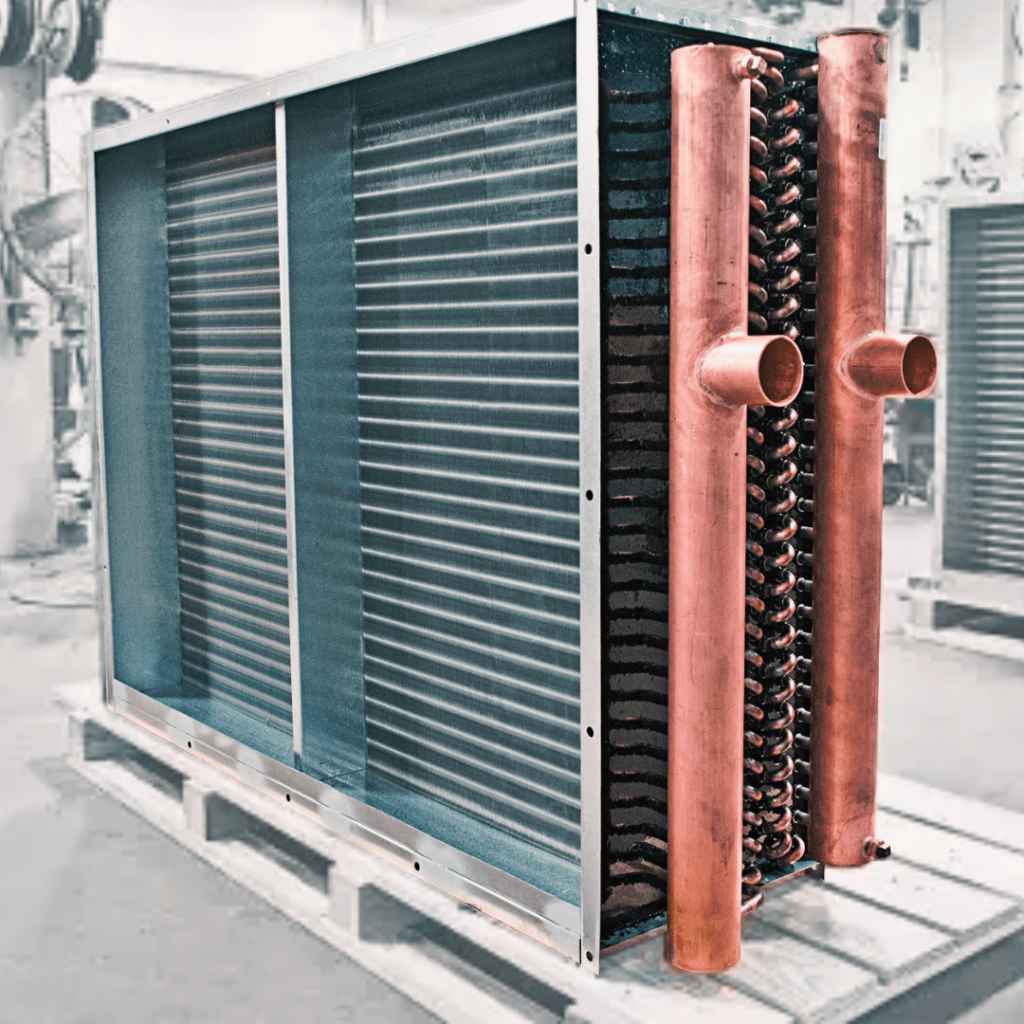

Signs You Need HVAC Coil Replacement
- Inconsistent Temperature Control: If your system is running longer than usual or struggling to maintain temperature, degraded coils could be to blame.
- Visible Coil Damage: Bent fins, rust spots, oil stains, or visible corrosion are all red flags. Even minor-looking damage can have a major impact on performance.
- Frequent System Breakdowns: Failing coils often trigger other issues within your system—compressor strain, refrigerant imbalances, inconsistent cycling.
- Poor Airflow and Humidity Control: When coils are clogged or corroded, airflow suffers—and so does your ability to regulate indoor humidity and temperature.
Types of HVAC Replacement Coils
Not all coils are created equal—and choosing the right type for your system starts with knowing what each one does.
Condenser Coils
Found in outdoor units, condenser coils do the opposite of evaporators: they release heat into the outdoor air. A failing condenser coil can drastically reduce system efficiency and lead to overheating or compressor damage.Hot Water and Steam Coils
Used primarily for heating applications, these coils circulate hot water or steam to warm the air flowing through a system. They’re common in commercial and industrial heating setups and must be built to handle high pressures and temperatures.
Evaporator Coils
These coils are responsible for absorbing heat from indoor air, making them essential in air conditioning and refrigeration systems. They’re typically located inside air handling units or attached to furnaces and work in conjunction with a refrigerant to cool the air as it passes through.
Direct Expansion (DX) Coils
DX coils are found in split systems and packaged rooftop units. They use refrigerant to directly absorb and release heat, offering efficient heat exchange and a compact footprint. These are commonly used in both commercial and industrial environments.
Chilled Water Coils
These coils cool the air using chilled water supplied by a central plant or chiller. They’re often used in larger buildings where multiple air handlers connect to one cooling source, offering precise temperature control with a scalable design.
How to Choose the Right HVAC Replacement Coils
Choosing a replacement coil is about fit, function, and long-term performance.
- Material Selection: Copper and aluminum are the two most common coil materials. Copper offers excellent thermal conductivity and is easier to repair, while aluminum is lighter and more cost-effective. For harsh environments, coils with corrosion-resistant coatings (like phenolic or baked-on epoxy) are a smart investment.
- Customization Needs: Not every project fits a standard spec. Whether you’re replacing a legacy coil or working within tight space constraints, custom-manufactured coils ensure proper fit and performance—without the need for ductwork or equipment modifications.
- Size and Compatibility: Even minor mismatches in coil dimensions can lead to airflow issues, reduced heat transfer, or long-term system inefficiencies. That’s why precision matters. An on-site assessment can help verify the right size and configuration for seamless integration.
- Performance Considerations: Look beyond the specs. Consider factors like:
- Fin spacing (affects airflow resistance and heat exchange)
- Air pressure drop (impacts fan energy use)
- Maintenance requirements (cleanability, accessibility).


The Benefits of High-Quality HVAC Replacement Coils
When it comes to replacement coils, quality pays for itself—sometimes faster than you think.
- Efficient coils transfer heat more effectively, which means your HVAC system doesn’t have to work as hard—or as long—to hit temperature targets.
- High-quality coils don’t just perform better—they last longer. With proper materials, coatings, and design, they resist corrosion and wear.
- Clean, well-functioning coils help maintain proper airflow and humidity levels. That means more consistent comfort and fewer issues with mold, allergens, or stale air.
- Durable coils with corrosion-resistant finishes require less frequent service and fewer emergency repairs.
HVAC Replacement Coil Installation and Support
Even the highest-grade coil is only as effective as its installation. That’s why we offer more than just equipment—we provide expert guidance and hands-on support from the start.
1. On-Site Assessments
Choosing the right coil isn’t guesswork—it’s engineering. Our experienced field team conducts on-site evaluations to measure, inspect, and recommend coil solutions tailored to your exact system needs. Just the right coil—built to spec and ready to go.
2. Professional Installation
Coil installation isn’t a plug-and-play job. Proper installation ensures optimal airflow, pressure drop, and thermal performance. Our team works directly with contractors and facility managers to ensure every coil fits right and performs as intended.
3. Preventive Maintenance Tips
The right coil is a good start—but keeping it clean and protected is just as important. We provide maintenance best practices tailored to your environment, from cleaning intervals to airflow management strategies, so your coils last longer and work better.
Choose Us for Your HVAC Replacement Coils
When system performance is on the line, you need more than just a supplier—you need a partner who understands the bigger picture. That’s where we come in.
With decades of experience and a focus on commercial and industrial environments, we know what works. Our engineers are hands-on problem-solvers who help you make the right call every time.
- Custom Manufacturing: From tight fits to legacy systems, we specialize in precision-engineered coils built to your exact specifications. No retrofits, no compromises.
- Fast Turnaround: Downtime isn’t an option. We offer quick production and shipping options to keep your projects on schedule—even when replacements are needed ASAP.
- Quality Materials: We work with trusted manufacturers and use high-grade metals and protective coatings to ensure long-lasting, corrosion-resistant performance—no shortcuts.
Our team is here before, during, and after the install. Whether you need help selecting a coil, troubleshooting a system, or planning future upgrades, we’ve got your back. Just tell us what you need—we’ll handle the rest.
Ready to find the right replacement coil? Contact us today for a consultation or quote—and get the performance your system deserves.
Industrial Replacement Coil Manufacturing Partners
We are committed to providing our customers with quality products, engineering and customer service through creativity, integrity and professionalism. Below are our partners in replacement coils for industrial HVAC.



Types of Replacement Coils
Evaporator Coil
The evaporator coil is a critical component in the cooling process, where it absorbs heat from the air as refrigerant evaporates within the coil. This coil is essential for maintaining consistent temperature control in industrial HVAC systems.
Hot Water Coil
Hot water coils are used for heating applications, where hot water is circulated through the coil to transfer heat to the surrounding air. These coils are vital for providing uniform heating in large industrial spaces.
Condenser Coil
Condenser coils are responsible for releasing heat from the refrigerant as it condenses back into a liquid. They are crucial in the cooling cycle, ensuring efficient heat dissipation in industrial HVAC systems.
Reheat Coil
Reheat coils are used to add heat to the air after it has been cooled and dehumidified, allowing for precise humidity control in industrial environments. This is particularly important in processes where specific humidity levels must be maintained.
Steam Coil
Steam coils provide efficient heating by using steam as the heat source, making them ideal for large-scale industrial applications. They ensure rapid and consistent heating, which is essential for maintaining optimal operating conditions.
Chilled Water Coil
Chilled water coils are used for cooling applications, where chilled water is circulated through the coil to absorb heat from the air. These coils are essential for maintaining low temperatures in industrial processes.
Cooling Coil
Cooling coils are designed to remove heat from the air, reducing the temperature to desired levels in industrial settings. They play a key role in maintaining a comfortable and controlled environment.
Heating Coil
Heating coils are used to increase the temperature of the air, providing necessary warmth in industrial facilities. These coils are crucial for ensuring a stable and comfortable working environment during colder months.
Economizer Coil
Economizer coils are used in systems that take advantage of cooler outside air to reduce the load on the cooling system. They help improve energy efficiency by reducing the need for mechanical cooling in favorable conditions.
Refrigerant Coil
Refrigerant coils are essential for the refrigeration cycle, where they transfer heat between the air and the refrigerant. These coils are vital for maintaining the correct temperature in refrigeration systems used in industrial settings.
DX Coil
Direct Expansion (DX) coils are used in systems where the refrigerant expands directly within the coil to cool the air. They are known for their efficiency and are commonly used in industrial air conditioning systems.
Steam Distributing
Steam distributing coils are designed to evenly distribute steam throughout the coil, ensuring consistent heating in industrial applications. They are ideal for environments where uniform temperature control is critical.
Fluid Coil
Fluid coils are versatile components used for both heating and cooling, depending on the type of fluid (such as water or glycol) circulating through them. They are essential for adaptable HVAC systems in industrial settings.
Ammonia Coil
Ammonia coils are used in refrigeration systems that utilize ammonia as the refrigerant, providing effective heat transfer. These coils are particularly suited for large-scale industrial refrigeration applications due to ammonia's high efficiency.

Lincoln Associates
Headquarters
-
800 Battery Avenue SE, Suite 300
Atlanta, GA 30339 -
(770) 425-1500(770) 425-1500
- [email protected]
Contact Lincoln Associates Today.
*Our Customer Support Team will contact you within 24 hours during normal business operations.
Frequently Asked Questions
Lincoln Associates offers a comprehensive range of services, including consulting, design, and custom system integration for industrial and commercial HVAC and refrigeration systems. Their team of experts works closely with clients to develop tailored solutions that meet specific operational needs, ensuring optimal performance and energy efficiency. From initial concept to final installation, Lincoln Associates is committed to delivering top-quality service and support.
Lincoln Associates was established in 1972 with a mission to provide innovative HVAC and refrigeration solutions to the industrial and commercial sectors. Over the past five decades, the company has built a reputation for engineering excellence and customer service, becoming a trusted partner for businesses throughout the Southeast United States. Their long-standing commitment to quality and client satisfaction has driven their growth and success in the industry.
Lincoln Associates specializes in providing high-quality replacement coils for industrial HVAC systems, including DX, fluid, and steam coils. Our expertise covers a wide range of coil types, each engineered to ensure optimal performance and energy efficiency in demanding industrial environments. We focus on delivering solutions that enhance system reliability and reduce operational costs.
Lincoln Associates proudly represents Heatcraft, a leading manufacturer known for its high-quality and durable replacement coils for industrial HVAC systems. Heatcraft’s products are designed to meet the rigorous demands of industrial applications, ensuring long-lasting performance and efficiency. By partnering with such a reputable brand, we offer our clients reliable and effective solutions for their HVAC needs.
To request a consultation with Lincoln Associates for replacement coils for industrial HVAC or other services, you can visit our website at lincolnassoc.com and fill out the contact form, or reach out directly via phone or email. Our team is ready to assist you with your industrial HVAC and refrigeration needs, offering expert advice and tailored solutions. Whether you’re starting a new project or looking to upgrade an existing system, Lincoln Associates is here to help.
Lincoln Associates offers a variety of educational resources, including training and development programs in collaboration with Lincoln University. These programs are designed to enhance knowledge and skills in the HVAC and refrigeration fields, providing industry professionals with the latest technical training and industry insights. By participating in these programs, clients and partners can stay up-to-date with the latest advancements and best practices in the industry.


