About Us

Our Company History

About Lincoln Associates

Established in 1972, Lincoln Associates has become a leading representative in the HVAC & Refrigeration equipment industry by combining quality products with innovative engineering solutions. Our commitment is about to “Value Through Engineering” has been the foundation of our core value, ensuring complete customer satisfaction for over five decades.

See a full list of our trusted manufacturing partners.

About Lincoln Associates

The Lincoln Team

The Lincoln Team

Meet Our Skilled Professionals: Your Trusted HVAC & Refrigeration Experts

Our team consists of highly experienced engineers with degrees in mechanical and industrial engineering, including registered professionals. We offer engineering solutions and product support to industrial end-users, design-build mechanical contractors, and consulting engineers. Our unwavering dedication to every project has earned us a strong reputation within the design-build contract community and among end-users. We specialize in seamless custom system integration, utilizing equipment from our trusted manufacturing partners.

0
Years In Business
0 +
Trusted Vendors
0
Experienced Engineers
0 +
Happy Clients

Your Trusted Experts

The Lincoln Team

What We Do

Our product lines encompass a comprehensive range of refrigeration, industrial-grade heating, humidification, air purification, cooling, and dehumidification solutions. We begin by thoroughly assessing project requirements and then provide a tailored solution by carefully selecting and applying the appropriate commercial or industrial equipment. We remain on location to support our customers before, during, and after the completion of all projects.

Our Commitment to Excellence

Our Mission Statement

value

Our Principles

Lincoln Associates endeavors to be the leader in the representation of quality HVAC & Refrigeration manufacturers, as recognized by our customers, employees, peers, and the community.

ethics

Our Values

We are committed to providing our customers with quality products, engineering and customer service through creativity, integrity and professionalism.

targeting

Our Vision

We seek to provide a workplace in which employees may work toward a common goal for the benefit of our customers and vendors, and the company while at the same time achieving their personal goals, growth, and satisfaction.

Servicing The Southeast

Where We Work

Our primary service areas cover Georgia, Alabama, Tennessee, South Carolina, and Florida, where we consistently deliver exceptional HVAC & Refrigeration solutions to meet the unique needs of our valued clients.

A few of our Florida locations include suburbs and surrounding areas of Tampa, Pensacola, Orlando, and Miami. We cover the entire state and the Southeast.

Ready to Talk?

Contact Us

[wufoo username="shiftweb" formhash="psd206j1lrltre" autoresize="true" height="100" header="show" ssl="true"]

*Our Customer Support Team will reach out to you within 24 hours during normal business operations.
Scroll to Top
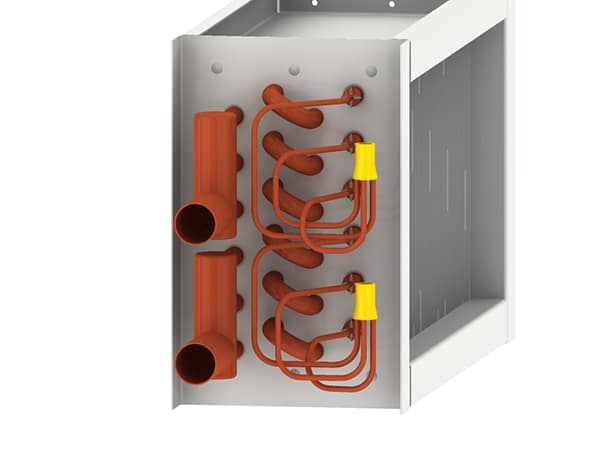
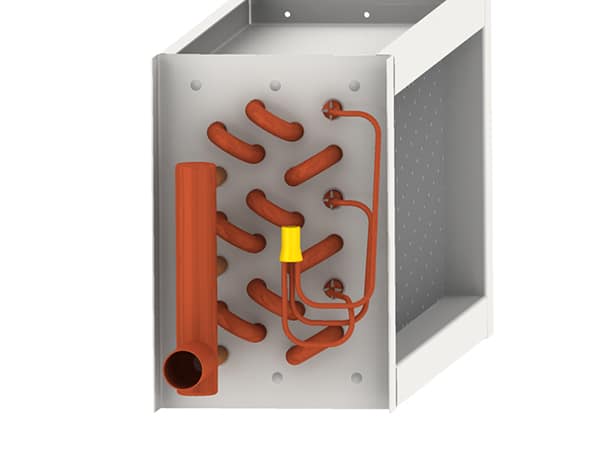
Evaporator Coil - Single-Circuit

Single Circuit

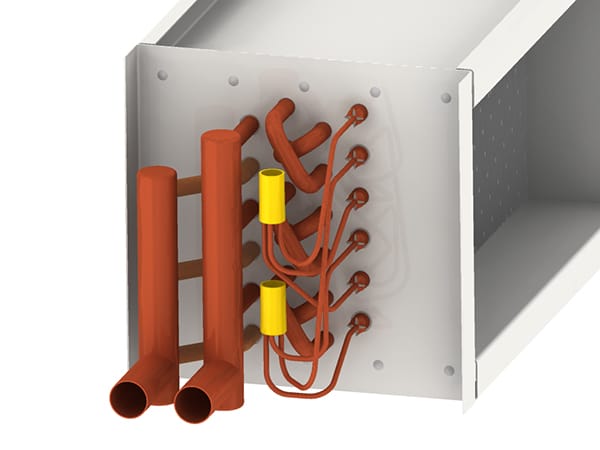
Evaporator Coil - Intertwined

Intertwined

Evaporator Coil - Split Face

Face Split face

Tube Diameter

Use a caliper or tape measure to determine the outside diameter of the tubes.

If necessary, remove insulation to see the incoming and outgoing lines. Measure the diameter of the outside of the line to help determine connection size.

Standard connection types are MPT (male pipe thread), FPT (female pipe thread), and Copper Sweat Connection. MPT is threaded on the outside, FPT is threaded on the inside, and Copper Sweat is used for soldered connections

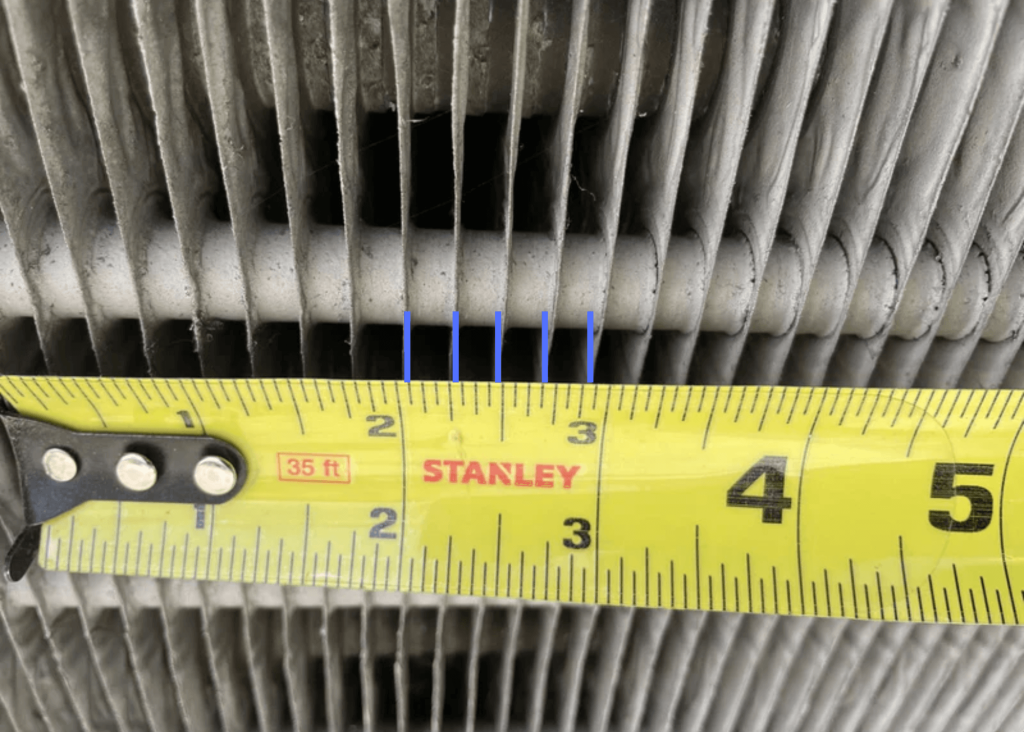
Fins per Inch

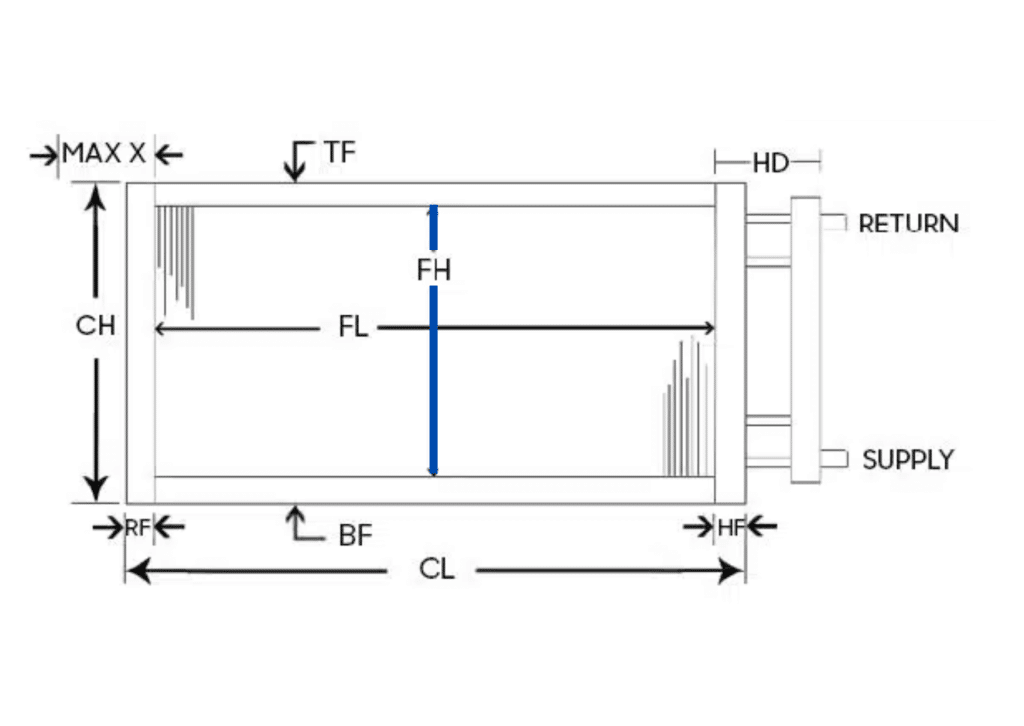
Using a ruler, count the number of fins on the coil within one inch. Normal fin counts will be between 4 and 14 FPI.

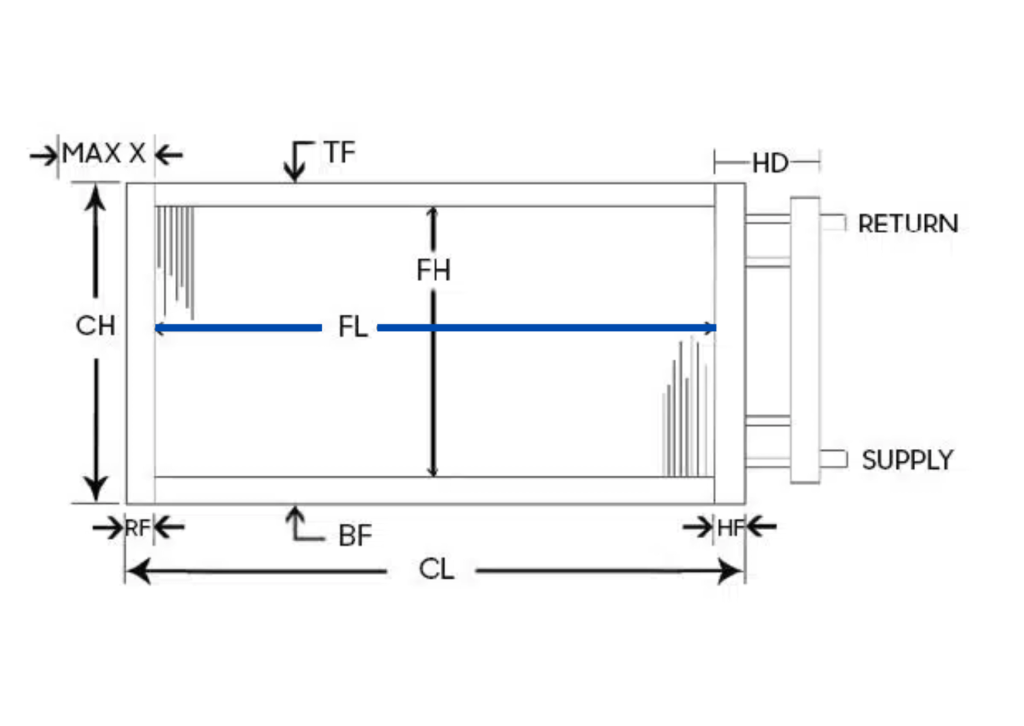
Fin Length

Measure in the direction of the tubes, regardless of which direction the tubes are running.

Fin Height

Measure in the direction of the fin.

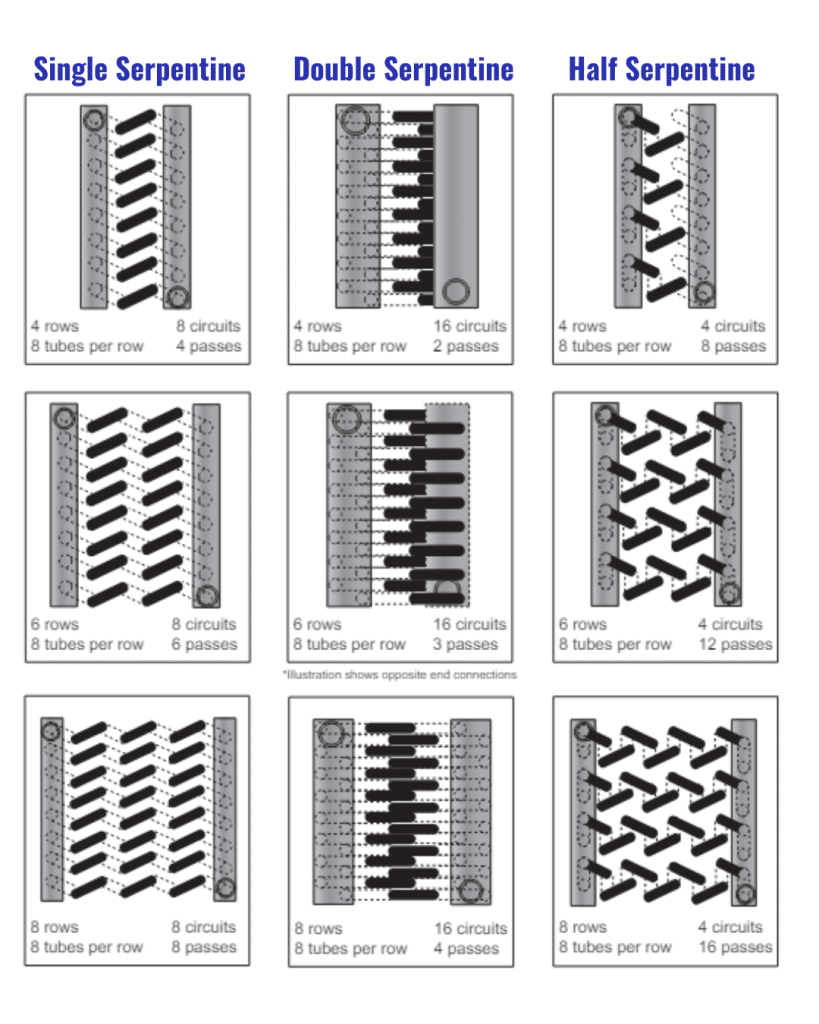
Single, Double, and Half Serpentine

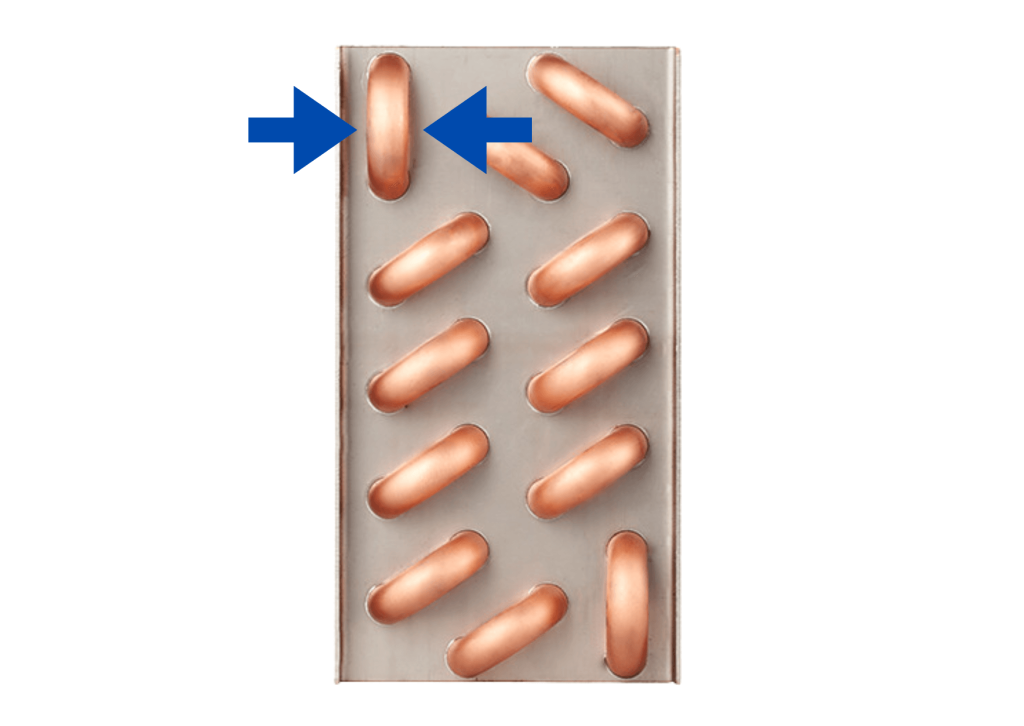
Rows are counted in the direction of airflow, no matter how the coil is installed. You can count rows by looking at either the header end or the return bend end of the coil. Note that headers or return bends may not be evenly spaced across the coil.

Fluid coils—hot water, chilled water, and glycol water—regulate building air temperature by heating or cooling air in Air Handling Units (AHUs). Constructed with multiple rows of tubes, typically copper, these coils efficiently transfer heat between air and circulating fluids. They are vital for year-round comfort, accommodating diverse fluids like glycols and thermal oils for varied HVAC needs.

Condenser coils transfer heat from refrigerant vapor to the outdoor air, ensuring efficient cooling in HVAC and refrigeration systems. Constructed from materials like copper or aluminum to maximize heat transfer, these coils are vital for maintaining precise temperature control in industrial and commercial environments.

Steam coils utilize the latent heat of steam, released during condensation from vapor to liquid. They feature efficient condensate management to prevent water buildup and ensure uniform steam distribution. Available in configurations for high and low-pressure applications, steam coils are highly effective for heating air in a wide range of environments.

Evaporator coils absorb heat from indoor air to cool and dehumidify spaces by evaporating refrigerant from liquid to vapor. Located indoors, these coils are essential for maintaining comfortable environments in industrial and commercial settings, offering excellent performance in cooling, process cooling, and dehumidification applications. They are versatile for use in Air Handling Units (AHUs), central systems, or duct installations.